





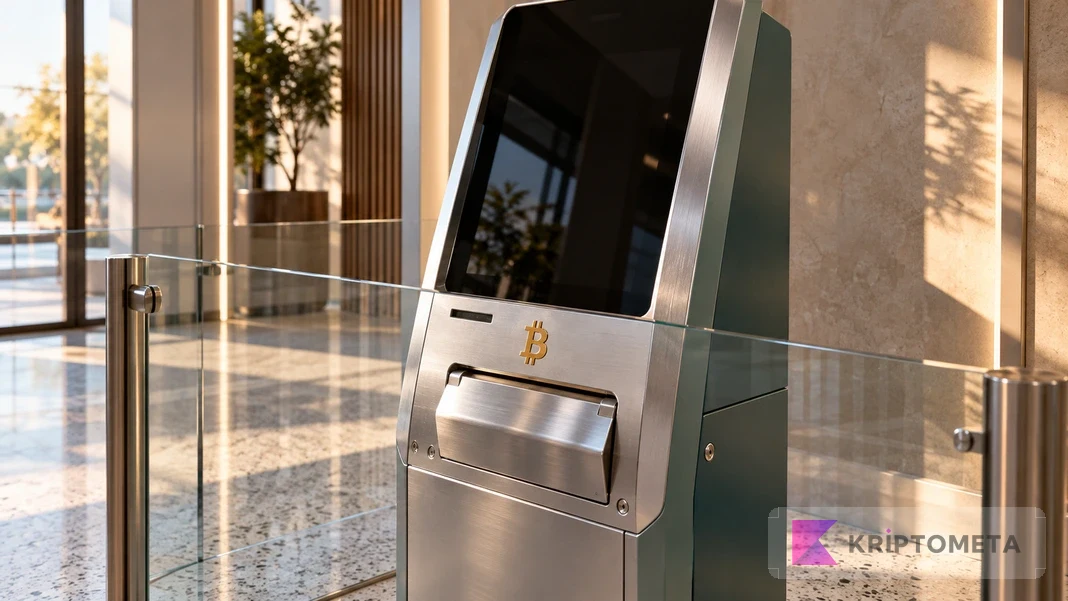








The Florida city’s commission unanimously banned public crypto ATMs, citing local fraud losses. Police Chief Brad Mock said losses were approaching $350,000. Operators face different removal deadlines depending on when their placement contracts were signed.
The Coral Springs City Commission in Florida has banned the installation and operation of publicly accessible crypto ATMs. Commissioners unanimously adopted Ordinance 2026-115 on second reading at their October 21 meeting. Operators generally have 60 calendar days to remove their machines. Certain older placement contracts allow a longer, limited transition.
Users may continue making lawful transactions through personal crypto wallets and holding crypto assets. Merchants may still accept crypto for their own goods and services. The meeting agenda records the commission’s first reading on October 7.
Police chief says losses are approaching $350,000
The ordinance text in the city’s agenda packet says criminals directed Coral Springs victims to crypto kiosks and defrauded them of more than $320,000 over the previous two years. According to the police analysis cited in the text, more than half of the victims in those cases were over 60, and 44% of the cases involved multiple transactions. The city calculated the figures from local fraud cases; it did not study all crypto ATM users.
Police Chief Brad Mock told commissioners on October 21 that losses were rapidly approaching $350,000 and supported the ban. The agenda packet gives the earlier loss of more than $320,000; Mock supplied the newer estimate at the meeting. The police chief argued that a limit at one machine offered insufficient protection. Discussing a $2,000 limit for an initial transaction, he said scammers could take victims to different machines to carry out further transactions.
Police Chief Brad Mock during the October 21 commission meeting“I fully support this.”
The city says rapid kiosk transfers can send funds to wallets controlled by people outside the city, Florida or the United States. Customers, financial institutions, operators and police can find it difficult or impossible to reverse completed transactions or recover the money. Commissioners cited physical access, transaction speed, relative anonymity and difficulty reversing transactions as distinct risks. They distinguished kiosks from ordinary retail payments and transactions on personal computers, phones or wallets. The city also said investigations consume substantial police resources and often fail to identify or apprehend a suspect.
In California, San Diego’s council gave initial approval to fraud warnings at crypto ATMs on October 20. That proposal did not ban the machines and required a second vote and the mayor’s signature before becoming final. Coral Springs commissioners gave final approval to removing public kiosks the following day.
Which machines does the ban cover?
The ordinance adds Section 1032 to the city’s Land Development Code. It covers physical electronic terminals through which users exchange fiat currency or virtual currency for virtual currency using cash, cards or digital wallets. The ban covers one-way and two-way kiosks, whether marketed as Bitcoin ATMs or under another name. Installing, keeping, operating or making one publicly available anywhere in the city is prohibited.
Operators cannot obtain an exemption for a qualifying kiosk by changing its branding, configuration, ownership, transaction direction or technology. Personal computers, tablets and phones are excluded, as are ordinary merchant payment terminals used solely to accept crypto for the merchant’s lawful goods and services. The ordinance defines virtual currency as an electronic or digital medium of exchange that is not fiat currency. It excludes currencies used only within games from the same publisher or on the same gaming platform. Closed-loop rewards are also excluded if they can be spent only with the issuer or designated merchants and cannot be converted into money or another medium of exchange.
The ordinance does not ban crypto ownership. Users may lawfully own, buy, sell, exchange, store, transfer, send and receive crypto assets. Personal wallets and lawful blockchain or distributed-ledger uses unrelated to physical kiosk operations are outside its scope. The ban applies within Coral Springs’ municipal boundaries.
The 60-day rule and the exception for older contracts
The ordinance takes effect upon commission approval. Operators must generally remove prohibited machines already in the city and permanently stop operating them within 60 calendar days of that approval. Leaving a machine in place with its screen switched off would not satisfy the stated removal requirement.
| Machine’s status | Deadline | Condition |
|---|---|---|
| General rule | 60 calendar days after the effective date | The machine must be removed and permanently cease operating. |
| Written placement contract signed on or before August 25, 2026 | The end of the then-current contract term or August 25, 2027, whichever is earlier | Subsequent extensions, renewals or amendments do not provide more time. |
An assignment, transfer, relocation, replacement or contract modification after August 25, 2026 cannot extend the exception. An operator cannot move a qualifying machine elsewhere within the city or replace it with another unit. If requested by the city, the operator must produce the complete executed contract and evidence of its execution date, current term and expiration.
Government bodies may continue using machines that they both own and operate for a governmental purpose. Machines and activities that state or federal law prevents the city from regulating are also exempt. Businesses must still meet registration and operating obligations under Chapter 560 of Florida’s statutes, which governs money-services businesses. The city is not creating a separate crypto ATM licensing system.
Operators, hosts and property owners can face separate action
The city can send a violation notice to anyone who knowingly installs, maintains, hosts or operates a prohibited kiosk, or permits it to remain. A host business, tenant or occupant controlling the premises, and the property owner can also receive notices. Each party may be held separately responsible for its own conduct, control of the premises or failure to act. Enforcement against one party does not prevent action against another. Each prohibited kiosk counts as a separate violation, even when several are located on the same property.
Fines can accrue for each day a violation continues under Chapter 162 of Florida’s statutes and the city’s rules. Commissioners classify prohibited kiosks as a public welfare and safety violation. The city may also seek temporary or permanent court injunctions, a declaration of legal rights or other available remedies, and recover enforcement costs where the law permits. It may combine remedies and, where legally allowed, go to court without first exhausting administrative enforcement options. An existing business tax receipt, zoning or building approval, electrical permit or inspection does not authorize operation of a prohibited kiosk.
Before the vote, City Attorney John Hearn said a representative of law firm Becker & Poliakoff had requested a delay to final reading by letter and phone. Hearn and Mock supported proceeding after reviewing the request. A commissioner who spoke during the discussion said they were open to working with the parties that had contacted them on a reasonable solution protecting residents; the ordinance then passed unanimously.
The 57:05–59:42 section of the city’s official meeting video contains the second reading, the police chief’s updated loss statement and the vote. The recording of the October 21 meeting was uploaded on October 22. The city did not announce in the reviewed documents or meeting record that all machines had been removed or that victims’ money had been recovered.


