












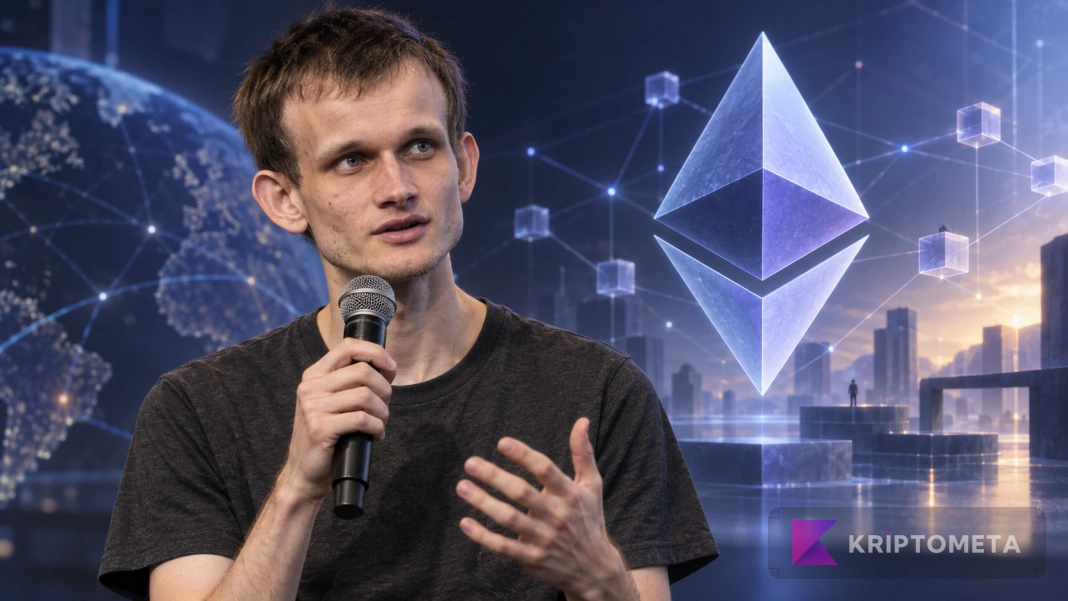
Buterin’s new essay brings together plans to reduce Ethereum’s verification workload and strengthen privacy. The direction proposed for the period after Hegota still faces engineering challenges.
Vitalik Buterin described Ethereum’s future as a “cryptographic world computer” in an essay published on September 27. The Ethereum co-founder outlined a design that brings together the blockchain, cryptographic proofs of correct computation and decentralized components operating outside the chain.
In an X post introducing the essay, Buterin said that direction would become more prominent with the upgrades following Hegota. The proposals aim to reduce verification work, strengthen privacy and make it harder to exclude valid transactions from blocks.
Vitalik Buterin’s post introducing the cryptographic world computer essay
The post loads from X when you open it.
Less work to verify, more room for privacy
The proposal places less emphasis on every participant repeating the same computation. Buterin describes an architecture in which cryptographic proofs help verify results while different participants share the workload. That could reduce the hardware demands of running a node and allow more computation to happen in parallel.
Looking back at Ethereum’s early efforts to scale by sharing work, Buterin writes:
“The missing ingredient was verification.”
Zero-knowledge proofs are part of that discussion. Their use for verification needs to be distinguished from the privacy an application actually provides: using ZK technology does not mean all transaction data becomes private. Buterin’s essay also acknowledges the remaining trade-offs between privacy and general-purpose computation.
FOCIL targets transaction censorship
FOCIL, another proposal mentioned in the announcement, addresses how transactions enter blocks. Selected validators would prepare inclusion lists, requiring block producers to include eligible transactions from those lists. The aim is to limit the ability of a small number of specialized builders to keep transactions out.
EIP-7805 was still marked as a draft when KriptoMeta reviewed the proposal. Its inclusion rules depend on transaction validity and available block capacity. FOCIL therefore should not be read as a promise that every transaction will complete immediately and without conditions.
What comes after Hegota?
Buterin refers to Hegota in the essay as an upgrade planned for next year. He expects cryptographic proofs and more efficient consensus methods to play a central role in the period that follows. The announcement does not establish that all these capabilities are live today or that they will arrive together in a single upgrade.
The remaining engineering work includes making proof generation fast and secure enough, managing growing amounts of network state and coordinating parallel access to it. Our Ethereum news coverage includes developments in the upgrade’s scope and schedule.
An increase in technical capacity does not mean the Ethereum price will rise by the same measure. Our Ethereum economic scenarios examine how fees, staking and network use can affect the asset’s economics.