















Five platforms automate trading in different ways. We examine their documented controls, monthly costs and custody arrangements, with annotated reading guidance for official interface examples.
The best crypto trading bots make an understood strategy easier to execute and monitor. They do not turn an unexplained trading idea into a reliable source of income. 3Commas, Cryptohopper, Bitsgap, Coinrule and Pionex take different approaches to automation, with different subscription costs, exchange connections and custody arrangements.
KriptoMeta’s editorial team compared the five platforms on cost, order controls, practice tools, permissions and operational limitations. Prices and documentation were checked on September 29, 2026. This is an international software comparison, not a list of services available to every U.S. resident. In particular, Pionex Global’s terms restrict U.S., UK and Canadian users; its regional services must be assessed separately.
Five crypto trading bots compared
| Platform | Strongest use case | Starting cost | Main consideration |
|---|---|---|---|
| 3Commas | Detailed DCA, grid and signal order management | Starter: $20/month | Averaging budget and previous API security incident |
| Cryptohopper | Indicator strategies and testing workflows | Explorer: $29/month | Strategy-check intervals and optional marketplace costs |
| Bitsgap | Grid monitoring and order reconciliation | Basic: $29/month | Realized bot profit versus remaining asset losses |
| Coinrule | Condition-and-action rules without writing code | Limited free Classic plan; Investor: $39.99/month | Classic and Cloud have different limits and billing |
| Pionex Global | Spot grids inside an exchange account | No separate grid subscription; standard spot fee: 0.05% per fill | Exchange custody, eligibility and fees on both sides |
Taxes, paid signals, credit overages and exchange charges may add to the listed price. Annual prepaid offers are not presented as month-to-month prices. We did not rank software vendors by trading volume: comparable independently verified figures are unavailable, and four of these services are not exchanges. Advertised user counts and profit totals do not establish reliability.
Our review method and its limits
We inspected official price selectors, help documentation and publicly available product materials. Each platform has three explanatory interface visuals drawn from its own published tutorials. Older tutorial screens illustrate controls, not current asset prices, current plan entitlements or verified returns.
We did not fund accounts, execute live trades or conduct a security audit. The judgments below explain how documented features affect the user. There is no sponsored ranking or referral code. For the underlying concept, our crypto trading bot definition explains the relationship between a trigger and an order.
1. 3Commas: for detailed order control
3Commas is most relevant when a trader wants to specify how a position starts, how subsequent orders add exposure and how the position is managed. That control is useful only if the owner can account for every order. More configuration can create more ways to exceed an intended budget.
Pricing and the practical workflow
The monthly plans are Starter at $20, Pro at $50 and Expert at $140. Starter is spot-only and includes one active API connection, five DCA bots, two grid bots and two signal bots. A higher bot allowance is not a reason to run that many strategies: several bots drawing on one exchange balance can compete for the same funds.
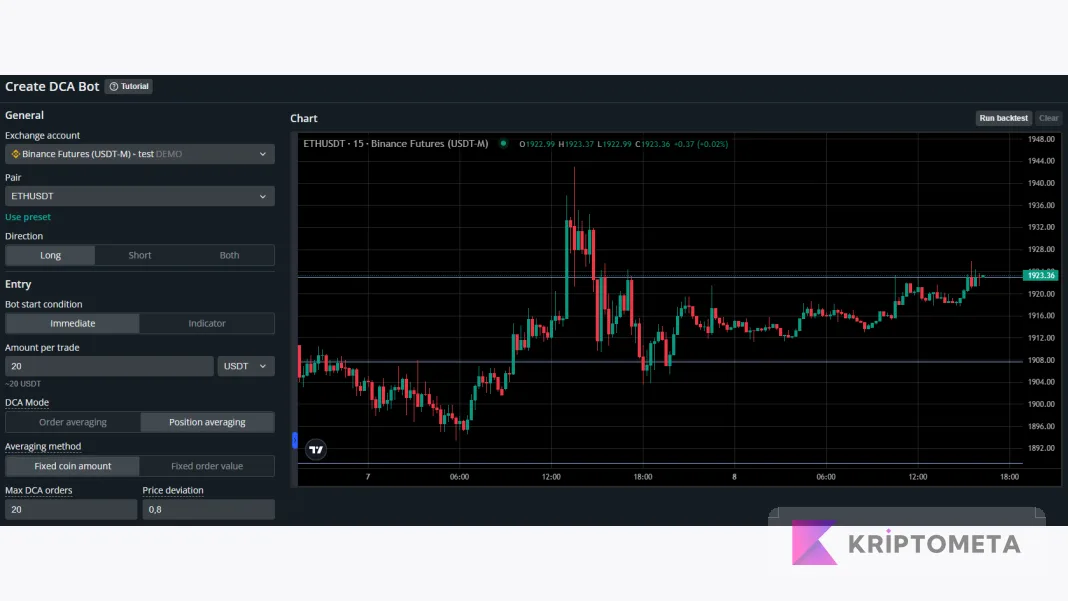
Official 3Commas DCA tutorial: exchange, pair and Amount settings beside the chart. The example shows futures; it must not be mistaken for Starter’s spot-only entitlement.
Start with maximum exposure rather than the most attractive entry signal. A hypothetical $100 initial order followed by $100, $200 and $400 additions commits $800 before fees. The average entry price may improve while the amount exposed to a continuing decline rises. Averaging down is not an automatic reduction in overall risk.
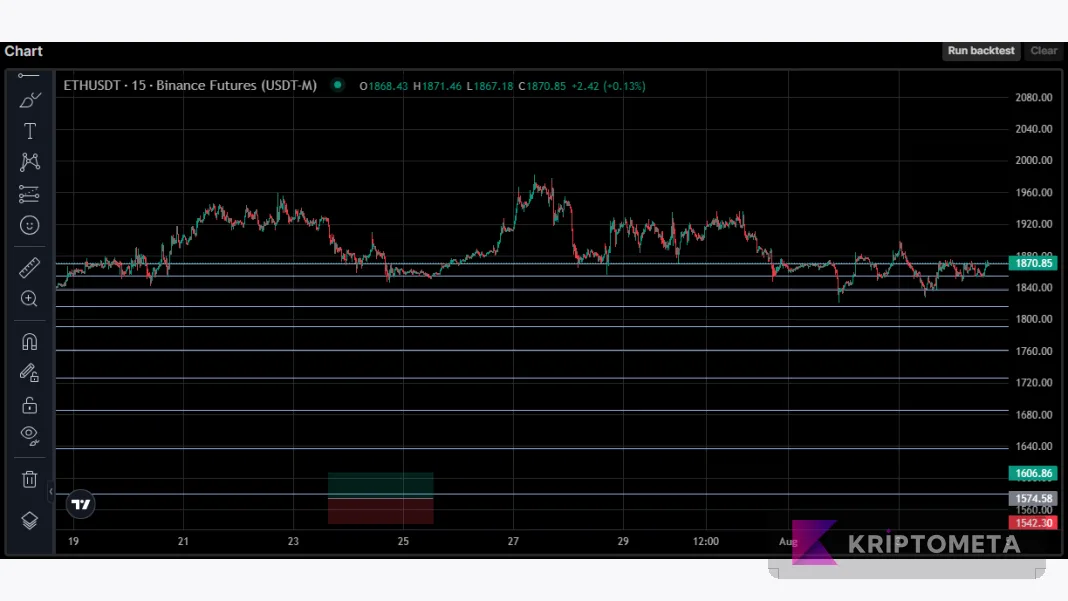
The official tutorial’s chart view places strategy levels beside price movement. The displayed market prices belong to the historical example, not a current quote.
The DCA setup guide separates averaging modes, amounts and start conditions. Our preferred evaluation sequence is total available capital, maximum simultaneous positions, then order spacing. Starting with spacing and discovering the total commitment afterward reverses the useful order of decisions.
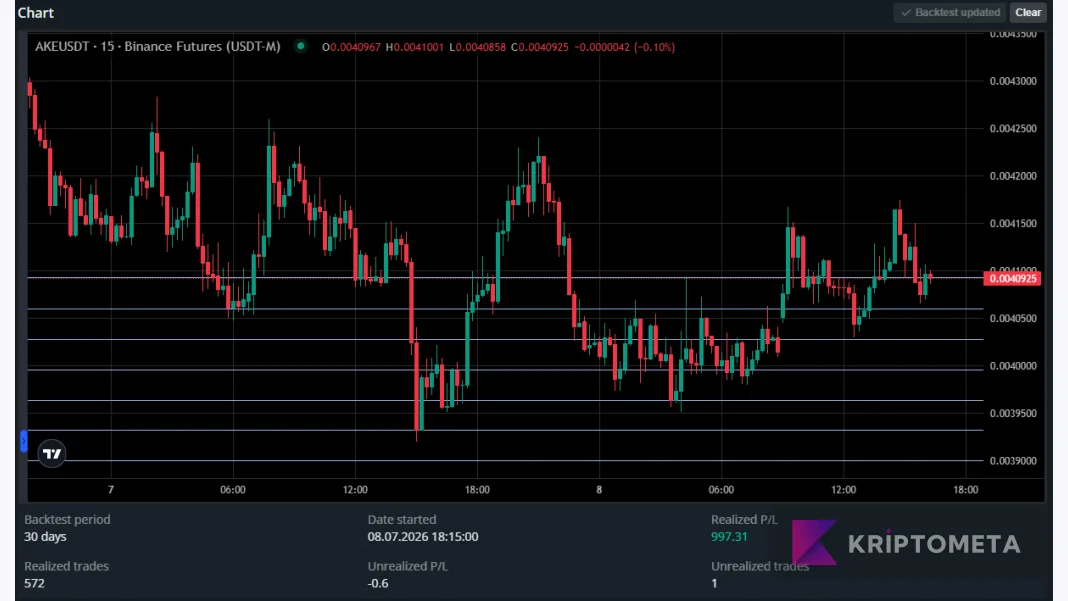
Official backtest example separating realized and unrealized results. The green return is vendor demonstration data, not a KriptoMeta result or a forecast.
Strengths, weaknesses and security history
- Strength: Separate entry and additional-order controls make the strategy easier to specify precisely.
- Strength: DCA tools and historical testing help examine assumptions before committing live funds.
- Weakness: Multiple pairs and concurrent positions make exposure harder to calculate.
- Weakness: A material historical API incident belongs in any assessment of the service.
3Commas acknowledged a December 2022 API data disclosure in its official incident notice. Its current security page describes controls including IP allowlisting. Later safeguards do not erase the incident, while a historical incident does not establish that every current account is compromised. Both the record and the present connection controls matter.
Best fit: Someone who understands order mechanics, records configuration changes and can calculate committed capital. It is a poor fit for an unattended “set it once and forget it” expectation.
2. Cryptohopper: for indicator strategies and testing
Cryptohopper suits users who want to combine technical conditions and inspect how a strategy behaves. A template can reduce setup work, but buying one does not explain why its trades should work. Choosing the software and choosing a strategy remain separate decisions.
Plan differences go beyond position counts
The monthly prices are $29 for Explorer, $69 for Adventurer and $129 for Hero. Strategy-check intervals are 10, 5 and 2 minutes respectively. Explorer allows 80 open positions per exchange and 15 coins; it does not continuously scan an unlimited portfolio simply because a dashboard is open. Applicable VAT is additional, and the Explorer trial lasts three days.
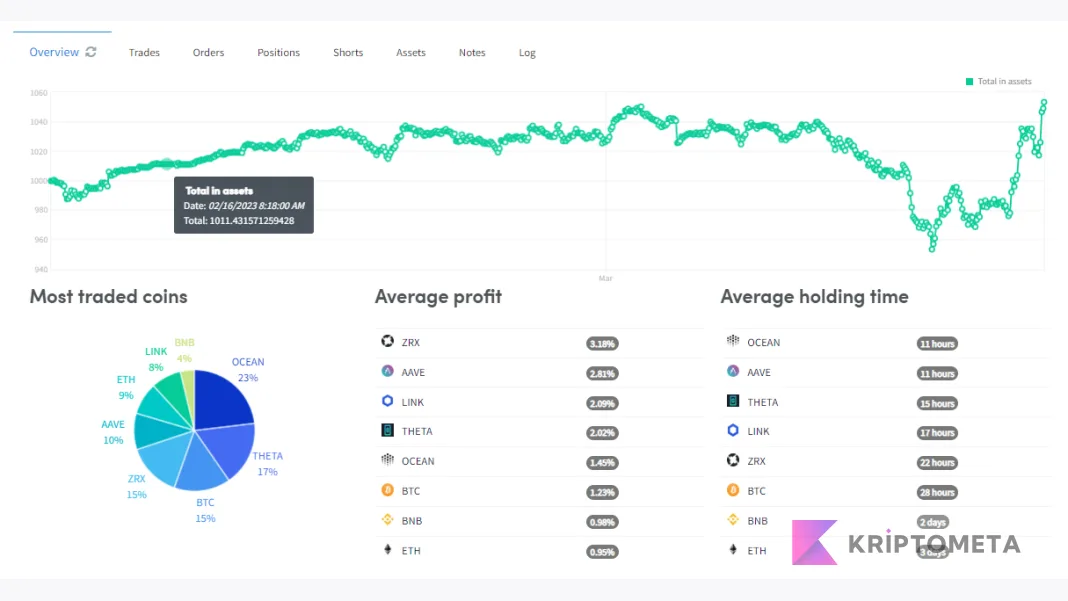
Official Cryptohopper backtest overview: result curve, traded assets and average holding time. It is published demonstration data, not an independent performance test.
The Strategy Designer combines indicators and candlestick conditions. Adding a second condition to an entry rule can reduce the number of trades. That alone does not improve quality: review the missed trades, adverse periods and unfinished positions as well as completed winners.
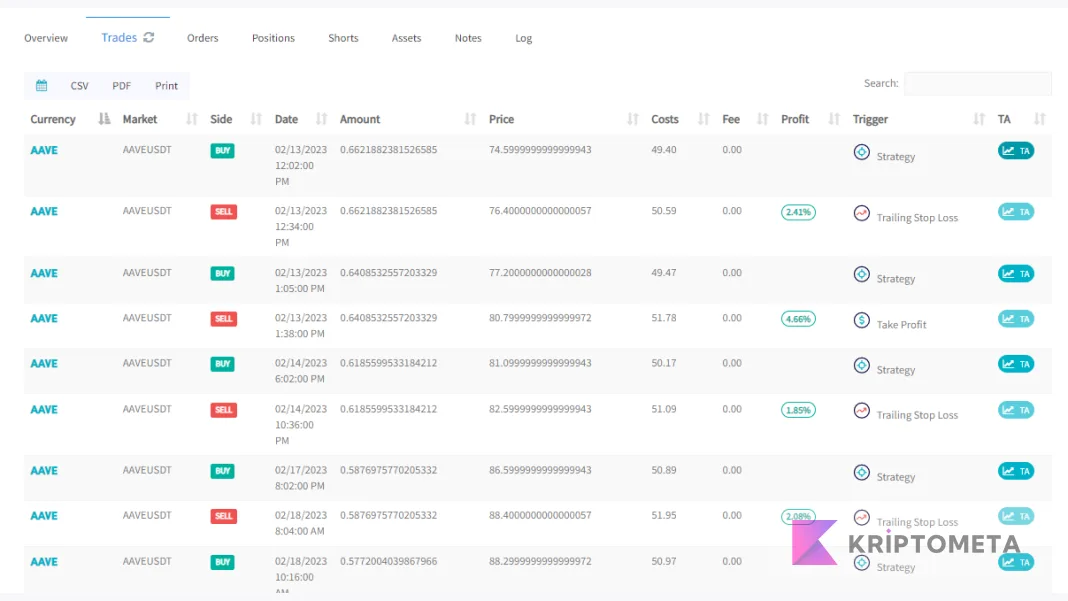
The official Trades example exposes entries, exits, costs, fees and trigger information. It lets the reader inspect the orders behind the headline curve.
The Backtester documentation explicitly excludes Triggers and TradingView Alerts from the simulation. If the live strategy relies on those components, the historical result is not a complete test of that live setup. Time resolution and simulated fills may also differ from execution on an exchange.
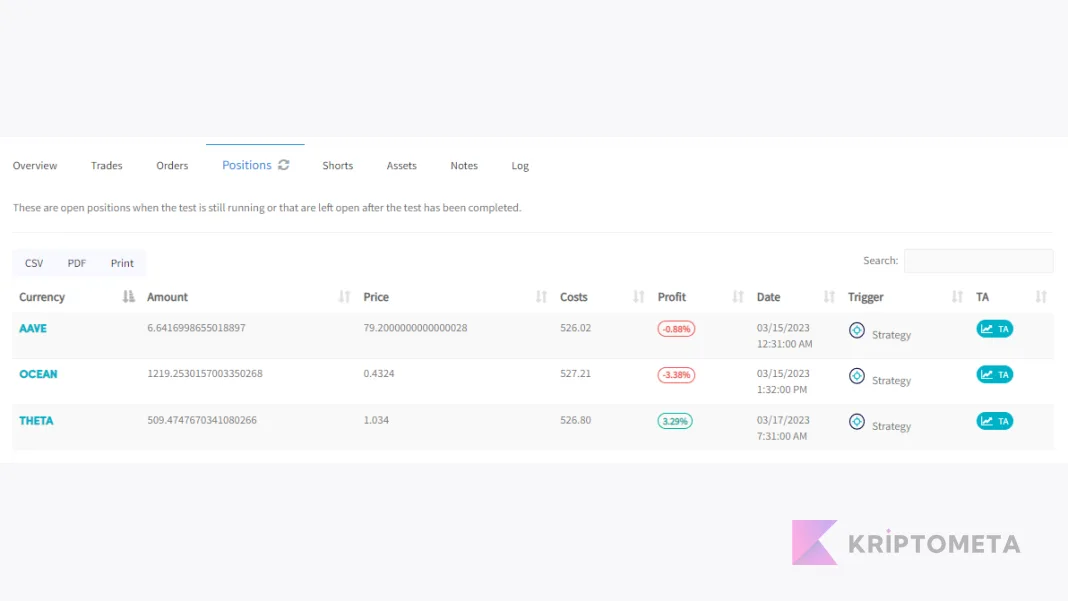
The official Positions view shows trades that remain open at the end of the test. Completed winners can coexist with losses still held in the portfolio.
Strengths, weaknesses and best fit
- Strength: Results can be examined through individual trades and remaining positions.
- Strength: Paper trading uses real market prices and a simulated balance; each trading-bot subscription permits one live and one paper bot.
- Weakness: Optional signals and marketplace purchases can increase total spending.
- Weakness: Strategy intervals and simulation exclusions require careful reading before a plan is chosen.
The platform is a better match for someone willing to learn the logic and read test records than for someone copying a profitable-looking screenshot. Cryptohopper also instructs users to keep exchange API withdrawal permission disabled. Order permission still deserves a strict capital limit.
3. Bitsgap: for monitoring a grid strategy
Bitsgap’s grid workflow gives a user a structured way to follow orders spread across a price range. The useful starting point is a view on that range, followed by grid count and allocated funds. Frequent completed sales do not prove that the account’s total dollar value has increased.
Read bot profit beside unrealized P&L
The monthly plans cost $29 for Basic, $69 for Advanced and $149 for Pro. Basic includes three grid and ten DCA bots. The current pricing page lists historical test windows of 30, 180 and 365 days respectively. Some older help text differs, so the current checkout entitlement should control a purchase decision. A seven-day Pro trial does not mean its features remain free afterward.
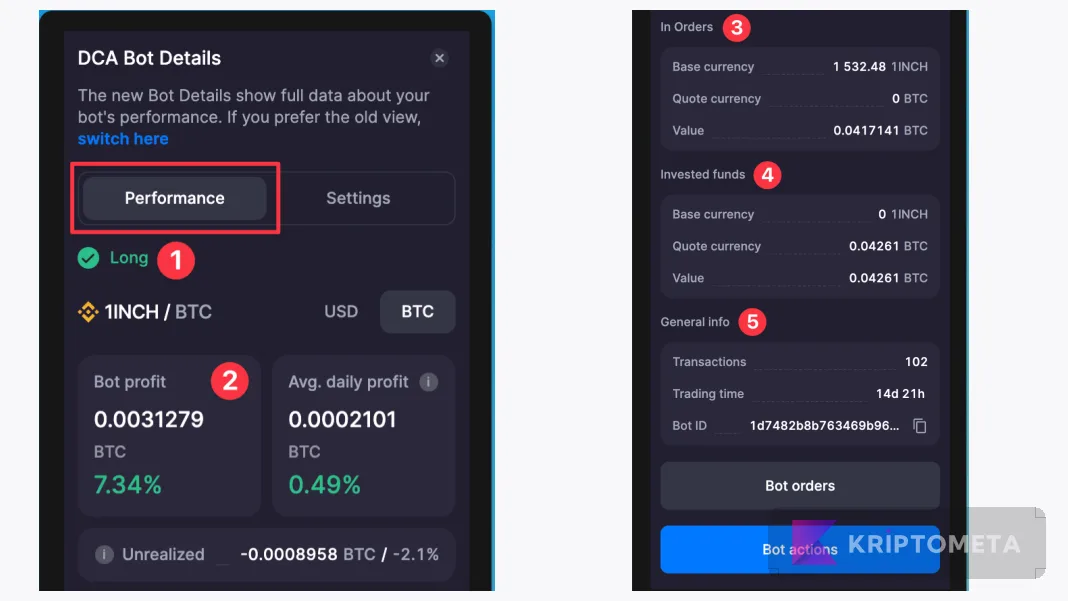
Official Bitsgap Bot details example published in 2023. The numbered fields distinguish performance components and allocated funds; current layout may differ.
Consider an illustrative grid that earns 25 USDT from closed cycles after trading fees while its remaining coins lose 70 USDT in value. With no other cash flows, the combined result is −45 USDT. Positive grid profit does not establish a profitable investment. Bitsgap’s performance documentation separates these components.
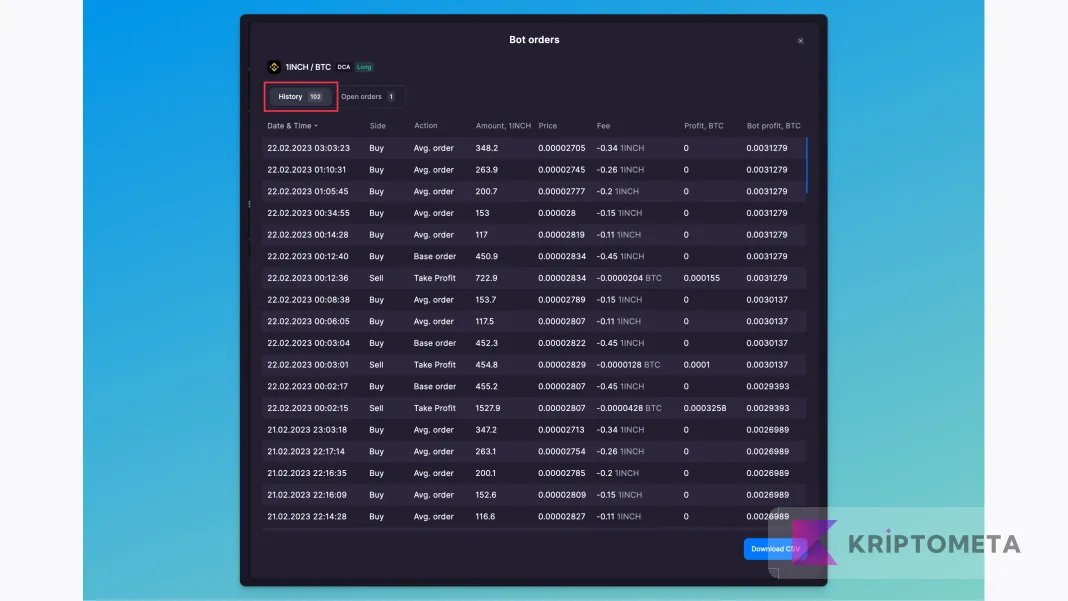
Official trade-history example: compare time, direction, price, quantity and fees with the reported result. It is a historical interface illustration, not current account activity.
The setup workflow covers exchange, pair, investment and testing. A grid trading bot with a tighter range may trade more frequently but leaves a smaller gross gap per cycle. Repeatedly moving that range after price escapes can quietly turn the original strategy into a different one.
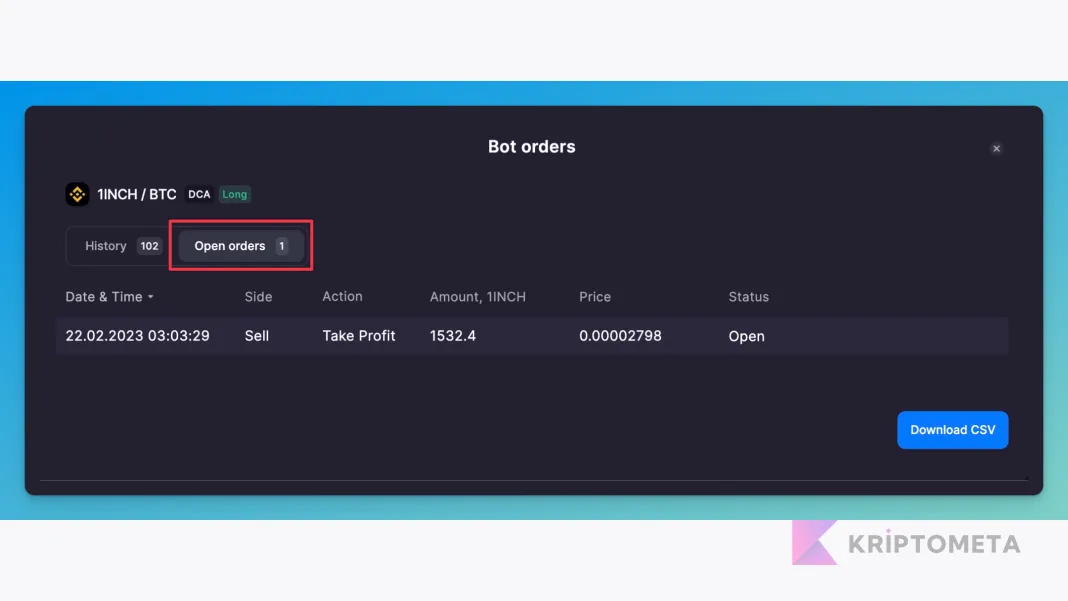
Official Bitsgap Open orders example. Unfilled orders belong to a different view from completed trade history; neither should be counted as a realized gain before execution.
Strengths, weaknesses and best fit
- Strength: A workflow that connects grid results with trade history and outstanding orders.
- Strength: A separate demo mode uses simulated funds. The AI assistant is not included in that mode.
- Weakness: Subscription cost can dominate a small allocation; exchange fees matter when turnover is high.
- Weakness: A grid does not eliminate a persistent decline and may leave the user holding the asset.
Bitsgap states that it rejects keys with withdrawal permission enabled. Trading access can still permit harmful orders. The platform fits someone who understands grid mechanics and will reconcile positions, rather than judge the strategy solely by a green bot-profit number.
4. Coinrule: for readable condition-and-action rules
Coinrule’s classic interface breaks a strategy into an exchange, a condition, an action and execution limits. Avoiding code does not remove the need to design the rule. If a price condition remains true for several minutes, the rule needs a deliberate repetition policy rather than accidental repeated buying.
Keep Classic and Cloud pricing separate
The Classic pricing page offers a limited free Starter plan, then monthly Investor at $39.99, Trader at $79.99 and Pro at $995. Starter has a $3,000 monthly trading-volume cap. Investor lists seven live and seven demo rules. The annual-payment headline of $29.99 per month is not the month-to-month Investor price.
The separate Coinrule Cloud pricing page lists Investor at $19.99 per month with 1,000 credits and an overage rate of $0.02 per credit. Combining Classic’s rule allowances with Cloud’s price would describe a package that was not verified. Check the product address, concurrent-agent allowance, credit consumption and overage policy together. Cloud also displays an EU/EEA service-marketing restriction and states that it lacks a MiCA CASP licence; do not assume universal regional eligibility.
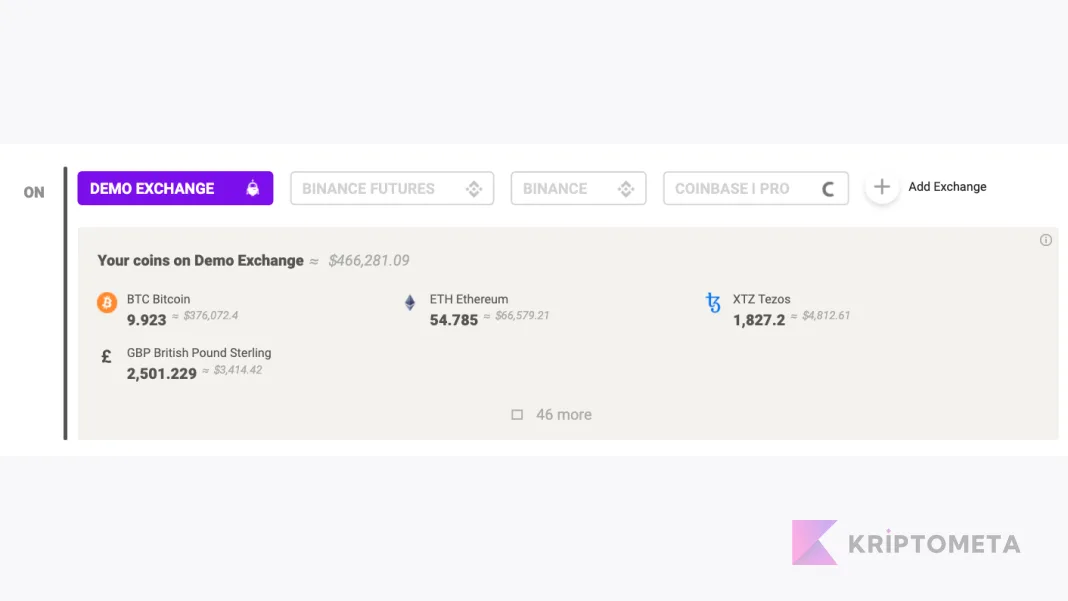
Official Coinrule setup example with Demo Exchange selected. The displayed simulated balances are neither funding requirements nor a KriptoMeta account.
The rule-building guide treats conditions, actions and execution limits as separate steps. For a hypothetical $50 purchase permitted four times, the maximum purchase budget is $200 before fees. A condition without a repetition limit can authorize more orders than the single trade the user had in mind.
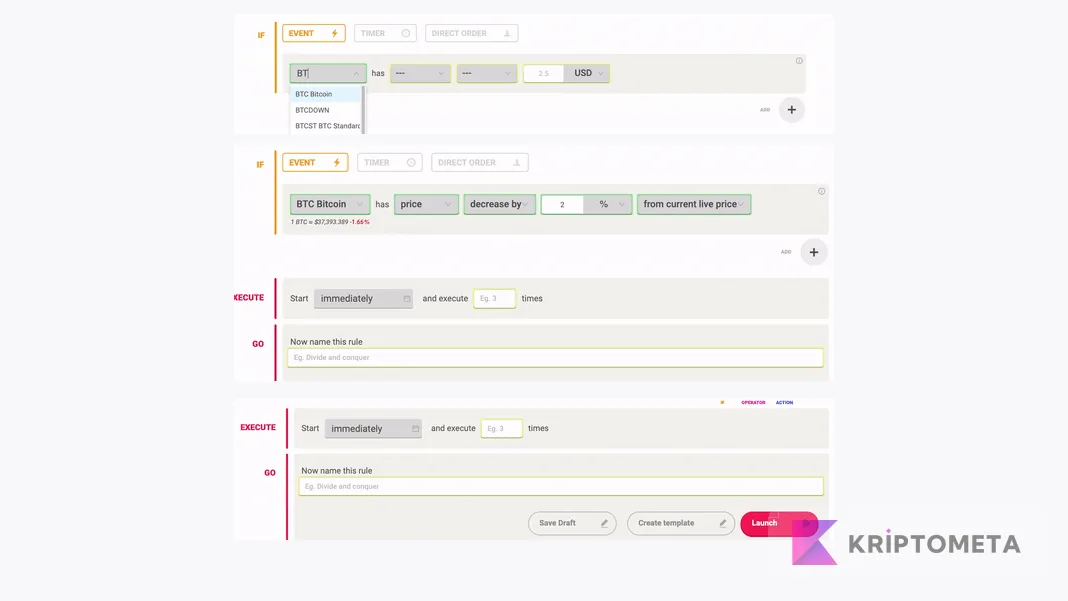
Condition, action and execution controls from Coinrule’s official tutorial, arranged together for reading. The interface content has not been rewritten.
The editing guide makes a useful distinction: stopping new executions does not automatically close all existing positions. Duplicating a rule can create another rule running alongside the original. Check the original status before allowing two similar instructions to compete for the same funds.
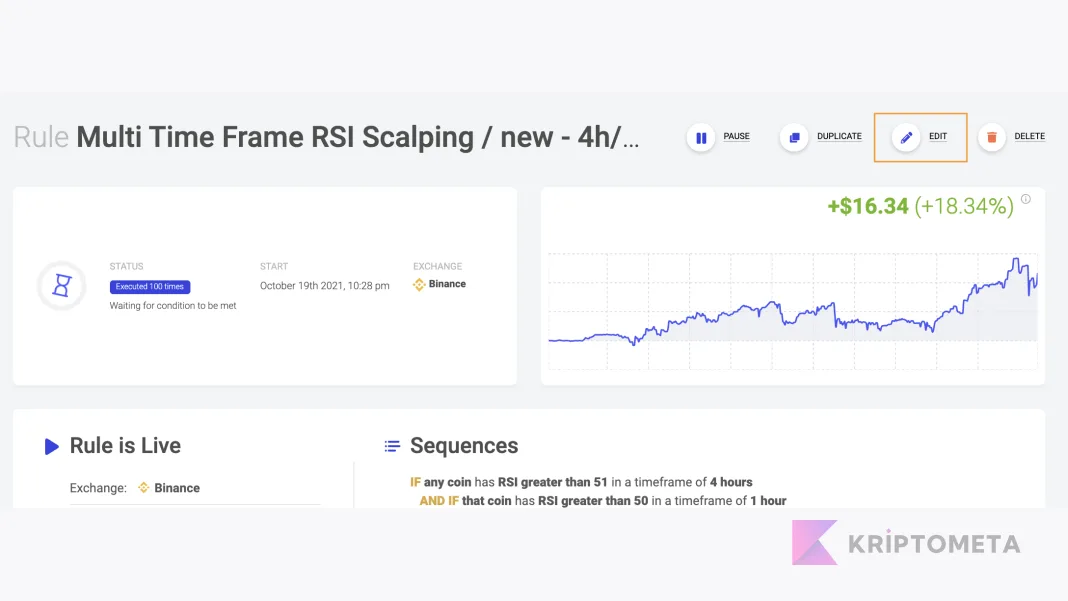
Official Edit example on a rule’s activity page. The return shown is historical provider demonstration data and was not used as evidence of superior performance.
Strengths, weaknesses and best fit
- Strength: Conditions and orders can be inspected as readable blocks.
- Strength: Execution limits and a demo exchange support learning the rule’s behavior.
- Weakness: Parallel Classic and Cloud offers make billing comparisons less straightforward.
- Weakness: Duplicated rules and positions left open after an edit require active oversight.
The security documentation says that withdrawal permission is not used. It does not imply that an incorrect rule cannot lose money through trades. Coinrule best fits someone who can explain precisely what should happen, under which conditions, and how many times.
5. Pionex Global: integrated spot grids, where eligible
Pionex has a different custody arrangement from the other four options. The bot operates on funds in the Pionex exchange account, rather than as an external software layer connected to another exchange. That removes a separate exchange-API setup but concentrates automation and custody with one provider.
No separate subscription does not mean no costs
The Global fee schedule lists standard spot maker and taker fees at 0.05%. The grid fee explanation applies the fee to each buy and sell fill. A hypothetical 1,000 USDT purchase costs 0.50 USDT; a 1,010 USDT sale costs 0.505 USDT. The gross 10 USDT difference leaves 8.995 USDT after 1.005 USDT of commission, before spread or slippage.
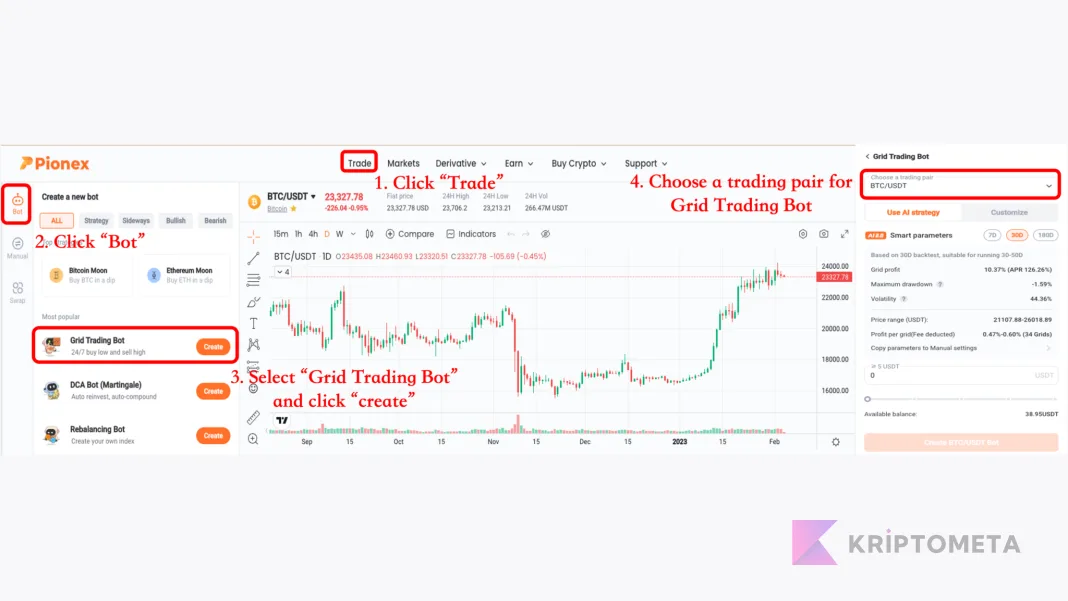
Official Pionex tutorial showing navigation to spot bots. This is a 2023 interface example; current menu placement and prices may differ.
The current grid overview emphasizes the operating range, grid count, investment and exits. An AI-assisted parameter suggestion is based on historical data, not knowledge of future prices. Minimum investment depends on the selected market and settings; a fixed minimum copied from an old screenshot is unreliable.
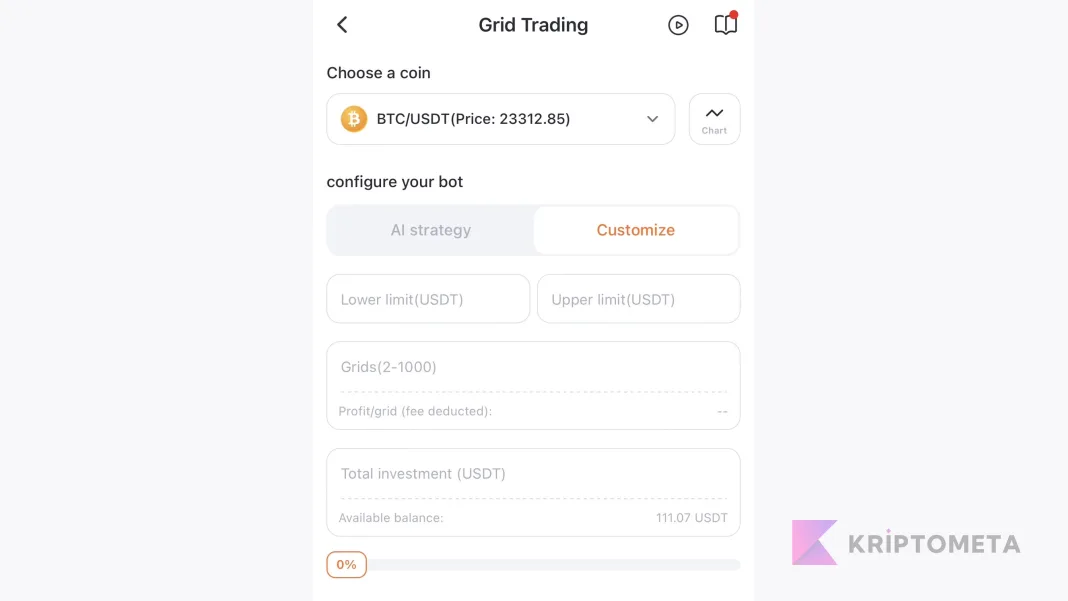
Official manual setup example: lower and upper prices, grid count and investment. Do not reuse the historical quote or minimum as a current trading input.
The advanced controls serve different purposes. A trigger price delays activation; a stop-loss setting governs an exit condition. Before stopping a bot, check what happens to the coins it holds. If an exit requires a market order, the eventual execution price can differ from the trigger.
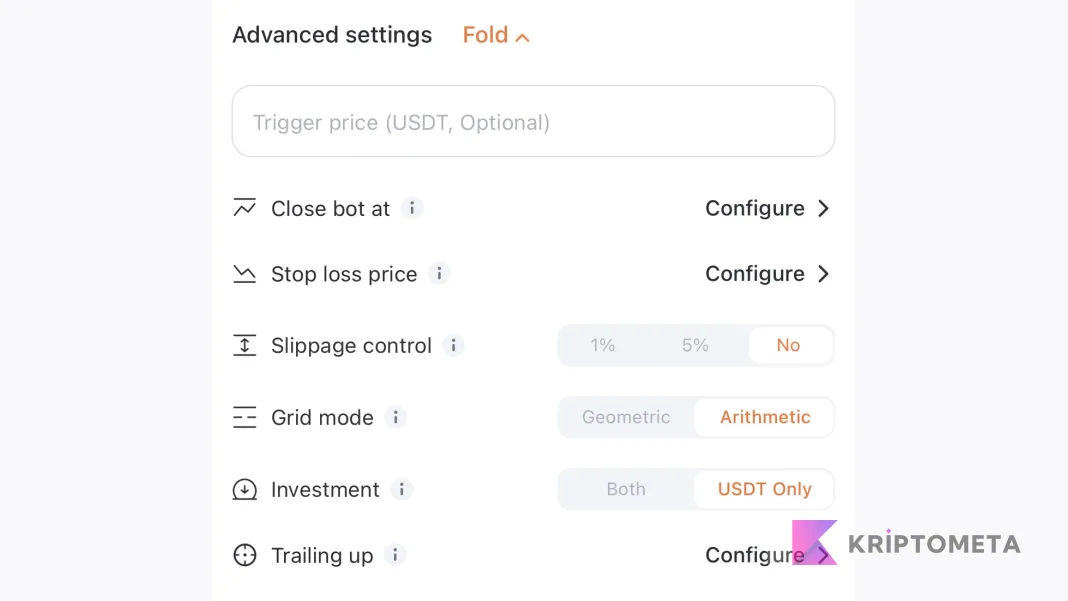
Official advanced settings example: trigger, closing and stop-loss controls, slippage and grid mode. It illustrates the controls rather than recommending personal parameters.
Strengths, weaknesses and regional limits
- Strength: Integrated grids without a separate monthly software subscription.
- Strength: Pair selection, allocation and exits reside within the exchange workflow.
- Weakness: Funds remain exposed to exchange custody and operations; this is not a tool for managing another exchange account.
- Weakness: Global availability is restricted and cannot be inferred from the brand’s regional products.
The Global terms list the United States, United Kingdom and Canada among restricted jurisdictions. Pionex Global is not our recommendation for residents of those countries. A similarly branded regional service has separate terms and fees. Readers elsewhere must still check eligibility for their residence and product. The official setup checklist also calls for a market view, liquidity assessment and exit plan before launch.
Calculate the full cost before choosing a bot
Subscription cost sits beside exchange commission, the bid–ask spread and slippage. Optional signals, credit overages and, for derivatives, funding can add more. The following calculation isolates software cost; it is not a return forecast.
| Allocated capital | Monthly software cost | Share of capital |
|---|---|---|
| $500 | $29 | 5.8% |
| $2,000 | $29 | 1.45% |
| $10,000 | $29 | 0.29% |
A $2,000 account needs $29 in net trading gains each month just to cover that subscription, even without a loss from price movement. Turnover adds exchange costs. Our crypto exchange fee comparison examines that separate expense.
A DCA bot that adds orders to a falling position is not the same strategy as investing a fixed amount each month. The historical DCA calculator helps explore the latter; it does not verify a trading bot’s live performance.
A practical reliability checklist
- Eligibility: Confirm your residence, the exchange’s regional entity, spot or derivatives product, and API support together. A supported brand name alone is insufficient.
- Permissions: Keep unnecessary withdrawal and transfer access off. Where supported, use a separate sub-account and the provider’s documented IP allowlist.
- Exposure: Add the initial order, every potential averaging order and concurrent strategies to calculate maximum committed funds.
- Observation: Keep a stable configuration long enough to evaluate it rather than tuning after every attractive historical result.
- Exit behavior: Stopping a bot, canceling outstanding orders and selling open positions may be separate actions.
- Incident response: Be able to revoke API access and inspect positions directly on the exchange if unexplained orders appear.
A backtest is a historical simulation. Test on a different period from the one used to choose settings, and inspect drawdown, remaining exposure and costs before relying on a win rate. Exchange selection is another decision: U.S. readers can use our U.S. crypto exchange comparison as a starting point for evaluating custody and regional platform access.
Which platform fits which need?
Detailed orders: 3Commas. Indicators and test records: Cryptohopper. Grid monitoring: Bitsgap. Readable conditional rules: Coinrule. Integrated subscription-free grids: Pionex Global, only where eligible. Those are workflow judgments, not a league table of expected returns.
No platform makes an unexplained strategy dependable. The useful first milestone is being able to say why an order opened, how much capital it commits and how the position will be closed.