














Crypto glossary
What is a decentralized exchange (DEX)?
 KriptoMeta Editorial Team
- Added:
A decentralized exchange (DEX) settles crypto-asset trades through smart contracts or other decentralized settlement mechanisms. In common spot designs, users sign from their own wallets rather than first funding an account balance controlled by an exchange operator.
The token exchange described in Ethereum’s DeFi overview differs from the custody model of a centralized exchange. A website, routing contract and token’s own administrative permissions still introduce distinct risks. Keeping control of a wallet does not make every interaction safe.
Example
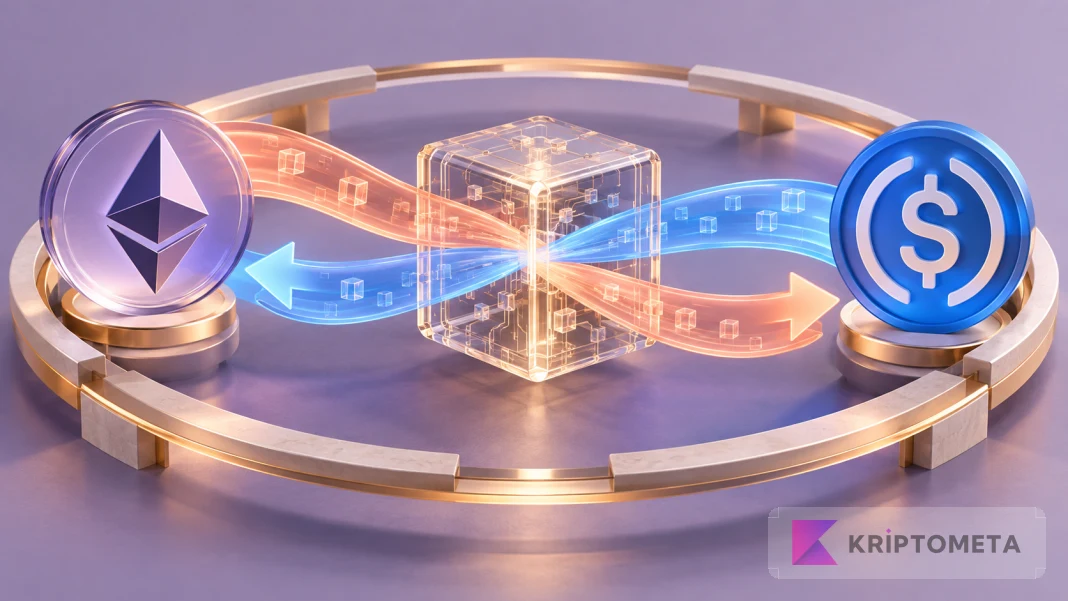
Suppose you offer 100 USDC for a quoted amount of ETH on Ethereum. Your wallet signs any required token permission and the swap transaction. If it succeeds, USDC decreases and the ETH balance changes; account for any network cost paid from ETH as well. Preparing the quote on screen does not mean the exchange has occurred.
Is every DEX an AMM?
No. An automated market maker prices trades using liquidity pools. Decentralized exchanges can use order books or other matching systems. The label does not establish which parts of a particular service are decentralized.
For the transaction workflow, our guide to swapping tokens on a DEX walks through network and contract checks, minimum output, spending permissions and the onchain receipt with a worked example.
Keep exploring
