













Choosing a deck in Splinterlands now carries a season-long commitment. Modern battle cards are locked to an account, while Champion receives 53% of the SPS reward pool; low participation can reduce bracket allocations.
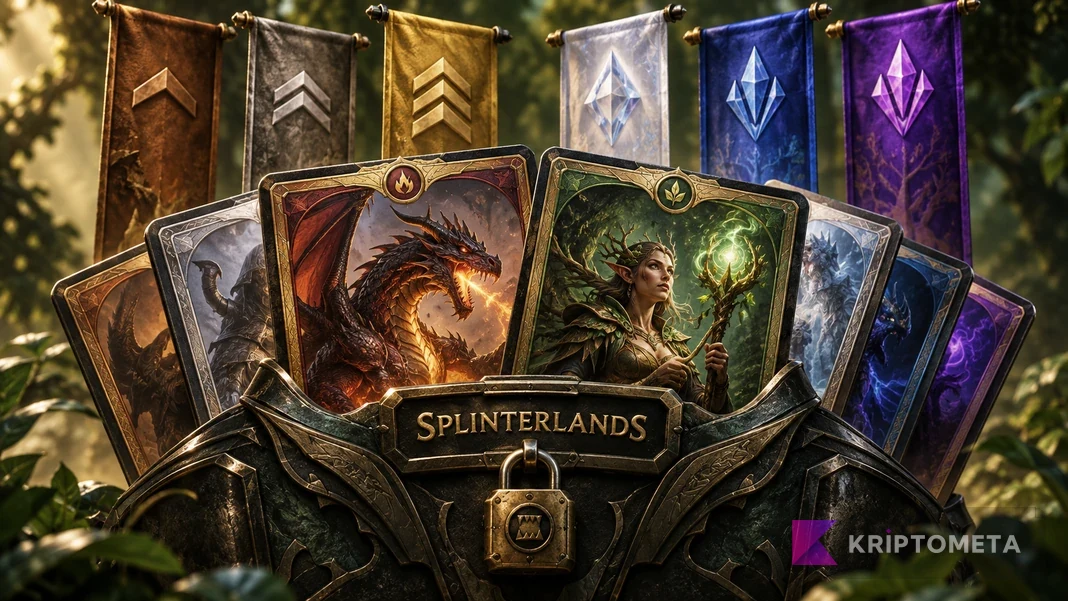
Splinterlands split its Modern ranked mode into six brackets in the September 30 update, changing more than the competitive ladder. The overhaul also determines when players can sell their battle cards and receive SPS rewards. Cards used in Modern battles are locked to an account until season-end, when SPS payouts will be made.
The game’s September 30 release notes confirm that the community-approved change is live. Each bracket has nine divisions. Players climb within their chosen bracket, starting in Division 9 at zero rating and advancing every 500 points. Division 1 begins at a rating of 4,000.
Champion gets 53% of the SPS reward pool
SPS payouts depend on the reward points a player earns relative to others in the same bracket. Champion receives 53% of the total Modern SPS pool, followed by Diamond with 25%, Gold with 12%, Silver with 6% and Bronze with 3%. The entry bracket receives the remaining 1%.
The official bracket announcement sets participation thresholds for the full allocations: 100 players for Champion, 200 for Diamond and 300 for Gold. If too few players enter, the bracket’s pool shrinks too. An individual player is also capped at 2% of their bracket’s SPS pool.
53% is not an individual return: It is Champion’s share of the overall pool. A player’s payout depends on competition, reward points and participation. The announcement promises no fixed SPS amount or dollar earnings.
Glint, the in-game reward awarded for each win, remains unchanged. The distinction between GameFi rewards and income applies here: knowing how a pool is divided does not establish a player’s net earnings.
Battle cards cannot change hands until season-end
For collectors, the most immediate consequence is losing the ability to sell or trade cards after using them in the bracket format. Entering a season with a deck means giving up the option to dispose of those cards straight away. The restriction applies to cards used in the relevant format, rather than the entire collection.
Energy purchases have also been disabled for the first season. Every Modern battle uses energy, regardless of division. The developers say purchases are suspended while they monitor the new system; they have not announced a permanent ban.
Bracket choice depends on the collection
Higher brackets carry different card-level requirements. A larger reward pool is therefore only part of the choice: a player’s collection must also support the bracket they enter. Under the release notes, a bracket can be reset until an advancement reward for the next division is received, but rating and reward shares return to zero.
The distinction between reward budgets and real player demand, examined in our GameFi economic analysis, will help put the season’s results in context. Splinterlands has set out the allocation rules; how participation spreads across brackets remains to be seen in the season data. Among recent blockchain gaming developments, the update directly changes both card availability and reward timing.
Splinterlands’ official X post on the September 30 update
The post loads from X when you open it.