










Crypto glossary
What is a block explorer?
 KriptoMeta Editorial Team
- Added:
- Updated:
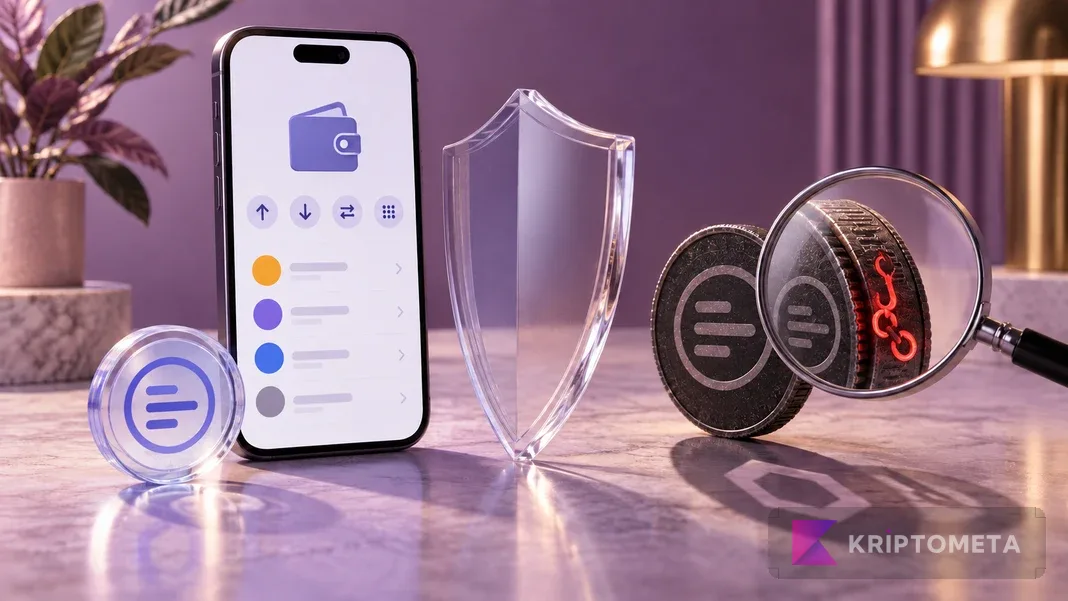
A block explorer is a tool for searching and reading blockchain data. You can look up a transaction ID, address or block number. Etherscan, which displays Ethereum records, is one example.
What can you see in a block explorer?
A transaction page can show its status, sender and recipient, amount and fee. An address page shows activity, while a block page lists the transactions included in that block. Available fields depend on the supported network. Token movements may appear separately from transfers of the network’s native currency.
For an expected payment, searching its transaction ID opens that record. Searching the address instead lists many transactions. The distinction helps avoid mistaking a different movement for the payment you are waiting for.
Can a block explorer replace a wallet?
No. An explorer does not hold your assets, manage your private key or reverse transactions. Reading public records requires no wallet connection or payment. Some explorers also offer contract-interaction tools; using those is different from performing a simple lookup.
A confirmation visible in an explorer does not necessarily mean an exchange has credited your balance. The onchain record and the platform’s own account records are separate.
Example
Suppose a friend sends you 0.02 ETH on Ethereum. Searching the transaction hash lets you check that the recipient is your address, the amount is 0.02 ETH and execution succeeded. An older transfer of 0.01 ETH to the same address is a different payment. The transaction hash helps you identify the one you are waiting for.
The steps for tracking a transfer in a block explorer distinguish a successful onchain transaction from a balance credited by a receiving platform.
Keep exploring