








Crypto glossary
What is a wrapped token? Representation and redemption
 KriptoMeta Editorial Team
- Added:
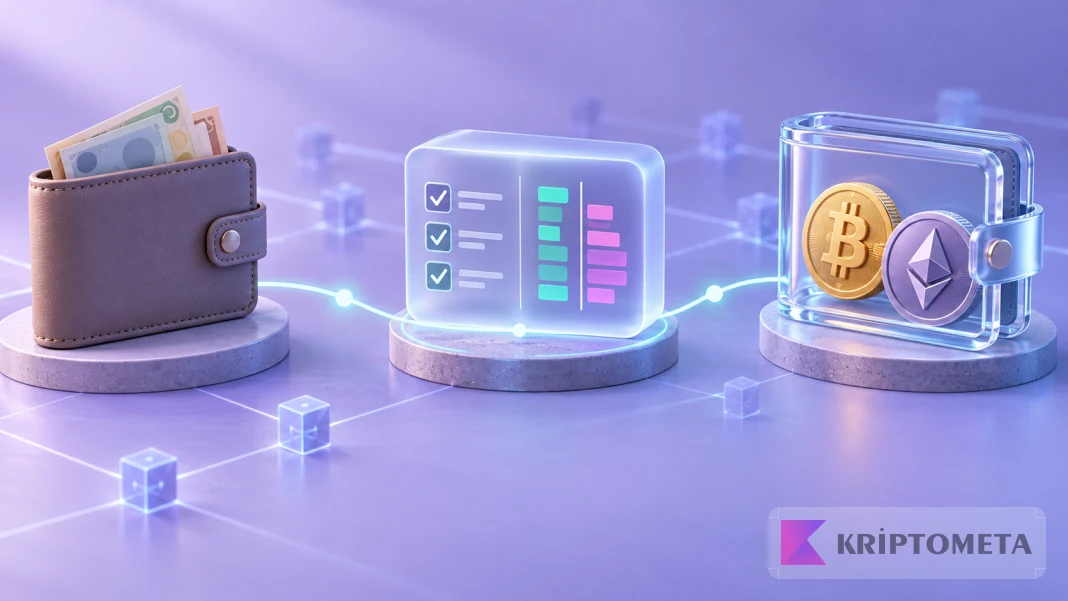
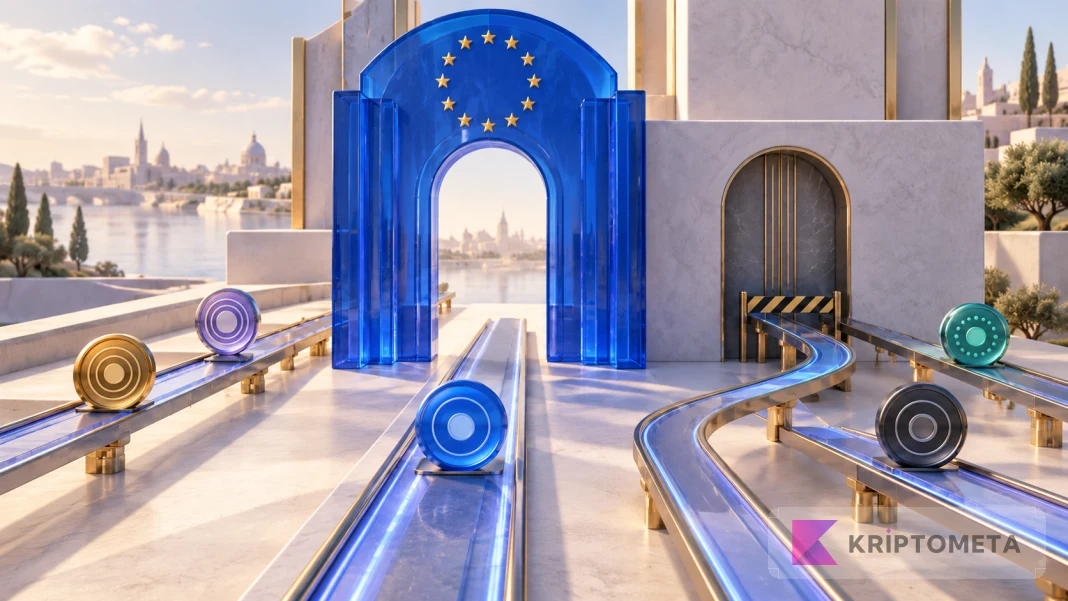
A wrapped token represents another asset through a smart contract or custody arrangement. Many implementations aim to allow redemption at a defined ratio. Access conditions, fees and security assumptions depend on the product rather than the wrapped label alone.
Is wrapping the same as bridging?
No. WETH makes ETH usable through an ERC-20 interface on Ethereum itself. A cross-chain bridge may instead issue a representation on a different blockchain. Not every wrapped token comes from a bridge, and not every bridge transfer creates a wrapped token.
Example
Alex deposits 1 ETH into Ethereum’s canonical WETH contract and receives 1 WETH, paying gas separately. A token labeled ETH on another network cannot be assumed to use the same contract. If that second token was bridge-issued, redemption may require the bridge to release the underlying asset on its source network rather than simply unwrapping locally.
Ethereum’s WETH documentation distinguishes implementations across applications and networks. Check the token name, chain, contract address and redemption path. If a custodian or bridge stops functioning, the intended representation ratio may not hold in market trading. Holding a wrapped token does not automatically earn interest or staking rewards.
For a representation on another network, check the source asset, destination token and redemption path together. The token verification steps in our bridge guide help distinguish assets that share a ticker.
Keep exploring